22 January 2013

Not A Cookbook -- Inaugural Luncheon

Niagara Falls by Ferdinand Richardt

 Menu with Recipes and Wine

Menu

Wine

  • Tierce Finger Lakes Dry Riesling (2010)
  • Korbel Natural, Special Inaugural Cuvée California Champagne
  • Bedell Cellars Merlot (2009)

10 January 2013

Fire In My Belly


It is no big surprise that I watch Top Chef.  Frankly, I find most of the chefs that compete, total tools.  OK, I do know that conflict makes for good television, so much of what we see is edited to make the contestants look as slimy as possible.   That being said, there have been really only a handful of contestants that I really, really loved.  Kevin Gillespie was one of them.   I was so glad to find out that his stint on Top Chef had landed him a cookbook deal.  Fire In My Belly has been on my wish list since it was first announced.

It did not disappoint.  The cookbook is what a real cookbook should be, an extension of the cook who put together the recipes.  Gillespie has stated that the cookbook is the most personal thing he has ever done.  In fact he has said he surprised even himself when he read through the book and realized how many personal stories he offered up.

Fire In My Belly offers up such chapter headings as "Foods that I thought I Hated" and "Food + Fire = Delicious."   While Gillespie's food is fun and inviting, it bears a truly authentic look at the South.  Not the precious, overly sentimentalized South, nor the reality television stupider-than-thou trend.  Giellespie recently articulated his position to Eater:

"There are so many people who think the entire South is Gone with the Wind, and the reality is that that's not true at all. My family is from the mountains, and that Appalachian culture is very, very different than the plantation culture of the Deep South. They're both Southerners, they both hold the right to claim themselves as such, but they're very different worlds, and I guess I felt it was time to showcase the other world a little bit more because it's more my personality, it's more of who I am."

The world of Kevin Gillespie is filled with family, history, and a really great meal.   Here is a favorite:


Woodfire Grill's Sage-Battered Mushrooms with Cheddar Fonduta


10 oz. of large cluster Oyster mushrooms
8 oz. sharp white cheddar cheese
1 ½ cups heavy cream
white pepper, a couple grinds
Salt
Canola oil for frying
½ cup of Cornstarch
½ cup all-purpose flour
1 Tb. Of fresh sage leaves, chiffonade
1 tsp. of rubbed sage
1 cup of cold soda or seltzer water
1/3 cup Candied garlic syrup


1.     Trim the tough root ends from the mushrooms , leaving the clusters as intact as possible. Set aside.
2.     Cut the cheese into ½ inch chunks and place in microwave safe bowl. Loosely cover with wax paper or parchment paper and microwave on 50% power until the cheese softens but doesn’t completely melt, about 30 seconds.
3.     In a 2-quart saucepan bring the cream to a boil over medium-high heat. Stir in the cheese, a couple of grinds of white pepper and a small pinch of salt until everything looks smooth. Keep the fonduta warm until you’re ready to serve it. If you need to hold it for more than an hour, it keeps warm best in a double boiler.
4.     Heat the oil in a deep fryer to 350 degrees F. Place a cooling rack over a baking sheet.
5.     In a large bowl, whisk together the cornstarch, flour, fresh sage and dried sage. Add a few ice cubes to the club soda and swirl to chill. Remove the ice cubes and whisk the club soda into the cornstarch mixture to form a smooth batter, working with one mushroom cluster at a time, dip and swirl the cluster in the batter to completely coat the mushrooms. Let excess batter drip away, then drop the clusters, one by one, into the fryer and fry until crispy, about 2 minutes. Using a spider strainer or tongs, transfer the fried mushrooms to the rack and immediately sprinkle with salt.
6.     For each plate, spoon one-quarter of the fondue in the center, drizzle with the garlic syrup, then mound one-quarter of the fried mushrooms on top.

For candied garlic syrup: (makes 1 ¼ cup)
1 cup sugar
1 cup cider vinegar
3 whole heads of garlic, each clove peeled and trimmed (approx. 30 cloves total)

In small nonreactive saucepan, stir together the sugar and vinegar and bring to a boil over medium-high heat. Add the garlic and cut the heat down to low; cook until garlic is golden brown and soft, about 30 minutes. Store the garlic in the syrup mixture, covered, in the refrigerator.


As Eater noted, Gillespie recently left the Woodfire Grill to start his own restaurant from the ground up.  Gunshow is set to show off his rough and rustic Southern cuisine.  We can't wait.

09 January 2013

Not a Cookbook-- Pasta By Design


When is large tome about pasta NOT a cookbook?  When it is Pasta By Design.  I was a huge fan of the The Geometry of Pasta, so imagine my surprise when I got it for Christmas.   White The Geometry of Pasta was an actual cookbook, Pasta By Design is an architectural survey of the contours and construction of pasta.  It is pasta as object, delineated by the mathematical mind of an architect.


According the publisher Thames & Hudson:

"The pasta family tree reveals unexpected relationships between pasta shapes, their usage and common DNA. Architect George L. Legendre has profiled 92 different kinds of pasta, classifying them into types using ‘phylogeny’ (the study of relatedness among natural forms).
Each spread is devoted to a single pasta, and explains its geographical origin, its process of manufacture and its etymology – alongside suggestions for minute-perfect preparation.
Next the shape is rendered as an equation and as a diagram that shows every distinctive scrunch, ridge and crimp with loving precision. "


George L. Legendre is a London architect who obviously finds math and equations in everyday objects.   After seeing bowl after bowl of pasta, the forms and fractals proved to be just too interesting to merely eat.  The mathematical pursuit began.


Complemented by the photographs by Stefano Graziani, one can honestly say that you will never look at that bowl of ziti in the same way.

07 January 2013

The Meatball Shop Cookbook


Yes, Virginia, Christmas was a windfall of cookbooks.  So let us get started.


The Meatball Shop Cookbook was one of those titles that was featured everywhere.  We resisted it on numerous occasions.  After being bombarded with American Express commercials and and commenting every time one came on the television, "I don't have that cookbook," someone decided I needed it.  There it was under the Christmas tree.  Earlier in the year I received a grinder for my Kitchenaid mixer, so now there is nothing stopping me from making mounds of meatballs.

Meatballs abound -- pork, beef, lamb, and fish.  Fish meatballs?  There are tips for making the balls like scooping them with and ice cream scoop to keep them consistent.   (Really, is there a more useful kitchen tool that the lowly ice cream scoop?)

With all those meatballs floating around it is only fitting and proper that there be sauce.  Again, there are sauces for every meatball and the sauces prove to be quite interchangeable.

According to the authors, Daniel Holzman and Michael “Meatball Mike” Chernow, man does not live by meatballs alone.   There is a fair amount of veg included in this homage to round balls of mixed meat.  As you know, we are partial to our carrots.  We just love roasting our carrots with a fruit accompaniment.  It is also widely known that we do not eat nuts in our food.  So while we often roast carrots with prunes, we never use walnuts.   (Frankly, we are hoping that many of our diners do not view this post as they will inevitably raise the issue of nuts in food and demand walnuts in their carrots from now on...but I digress.)


 Here with a non-meatball recipe from The Meatball Shop Cookbook.

Honey-Roasted Carrots with  Prunes, Walnuts, and Mint

for the carrots

8 large carrots Cut into 3 X 1-inch pieces
(like thick-cut french fries)
1/4 cup olive oil
1 teaspoon salt
1/2 cup honey

for the topping

1/4 cup chopped pitted prunes
1 tablespoon olive oil
1/4 cup chopped fresh mint
1/4 cup chopped toasted walnuts
1/2 teaspoon salt
squeeze of fresh lemon juice


 Preheat the oven to 450°F.

Toss the carrots with the olive oil in a large bowl, and coat thoroughly. Add the salt and toss to coat.
Combine the honey and 1/2 cup warm water in a small bowl and stir until thoroughly mixed.
Lay the carrots out on a large rimmed baking sheet or roasting pan so that they are evenly spaced and do not touch one another. Drizzle with the honey mixture and put the carrots in the oven to roast.

 Roast until all of the water has evaporated and the carrots are soft and beginning to brown, 35 to 40minutes.

While the carrots are roasting, prepare the topping. Mix the prunes and olive oil in a small bowl. Work the mixture so that the prunes are thoroughly coated and not sticking together. Add mint, walnuts, salt, and lemon juice and mix thoroughly to combine.

 Remove the carrots from the oven and arrange them on a serving dish. Spoon the topping over the carrots and serve.
I do so hate it when judgement is flawed.  Like meatballs themselves, this book is filled with fun and frolic and it should have graced our bookshelf long ago.   Now, thankfully, it does.

02 January 2013

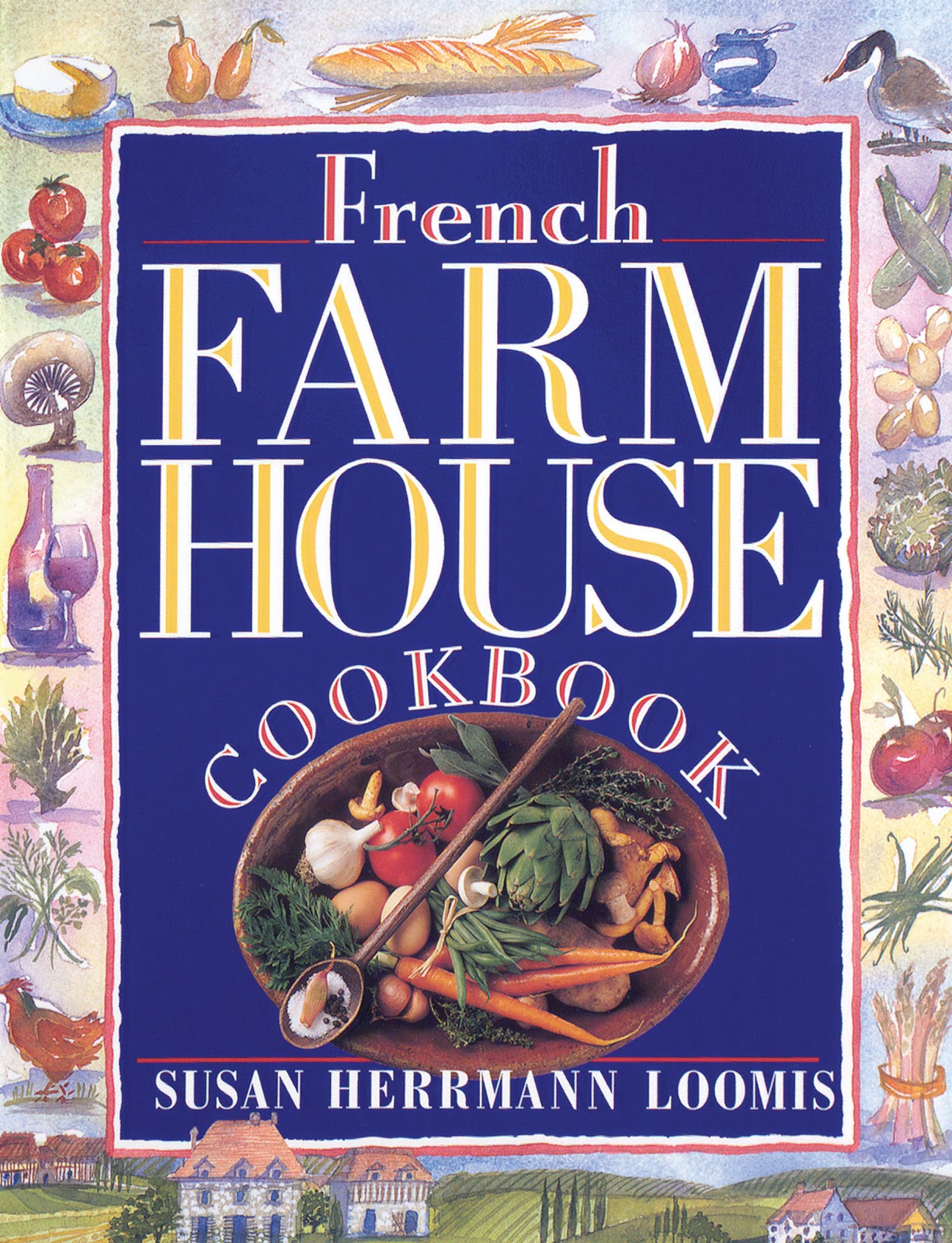
French Farmhouse Cookbook


We have checked our log of cookbook entries and simply cannot believe that we have never featured Susan Loomis' French Farmhouse Cookbook.  What were we thinking?   Clearly, we were not thinking.  Over at Lucindaville we featured our favorite holiday planned-over, an after Christmas eggs Benedict that is made with leftover dressing, giblet gravy and a poached egg or if one is so inclined, our favorite confit de gésiers

J.W. wanted to know our recipe for gizzard confit and the one we love to use is from the French Farmhouse Cookbook.  This cookbook is often described as the French cookbook to buy if you are in the market a truly authentic French cookbook.  One that presents recipes that a French family would actually eat every day.  That seems to be the best description one could provide. 

This is a rather old-fashioned cookbook in the sense that is offers no photos of the food.  While there are lovely line drawings, the food is left up to one's own imagination.  Still, this is the go-to French cookbook on my shelves that house thousands of French cookbooks.

With out further ado...

Confit de Gésiers. 

2 pounds chicken gizzards, cleaned and well rinsed
1/4 cup coarse sea salt
10 sprigs fresh thyme or 1/2 teaspoon dried
3 imported bay leaves
4 pounds pork fat cut in 1-inch pieces or lard
2 small onions, each pierced with one whole clove
1 teaspoon allspice berries

1.  Place the gizzards in a large bowl.  Add the salt, half the thyme, and one of the bay leaves, and mix until well  combined and the salt is evenly distributed.  Cover and refrigerate for 2 hours.

2.  Rinse the gizzards well by placing them in a bowl and filling the bowl with water.  Drain the gizzards, then repeat the procedure at least 4 times, to make sure you remove all the surface salt.  Pat gizzards dry.

3. Place the pork fat or lard in a large heavy saucepan over medium-high heat.  When it is two-thirds melted, add the gizzards, onions, remaining herbs, and allspice berries, stirring and pushing them down into the fat.  Lower the heat s the fat is simmering slowly.  Cook, uncovered, until the gizzards are tender, about 2 1/2 hours, stirring them occasionally and pushing any beneath the surface of fat so they cook evenly, adjusting the heat if necessary.

4. When the gizzards are cooked, remove the pan from the heat and let them cool in the fat until nearly congealed.  Transfer the gizzards and the fat  to a bowl or an earthenware or glass container and let them cool completely. Either eat them immediately, or store in the refrigerator for up to two weeks, covered with fat and aluminum foil.

5. Remove the gizzards from the fat and warm them gently in a saucepan over low heat.  Use a slotted spoon to remove them from the pan.

We are lucky enough to have several old cheese crocks that have hinged lids to lock in the gizzard goodness.   Also, we never use just plain aluminum foil on food products.  We used to use parchment lined foil that was designed for sandwich shops.  Now the good folks at Reynolds have introduced this parchment lined foil to the supermarket shelf.   Buy it --  it is wonderful.   If you are out there looking for a really good French cookbook that an actual French person in your exact shoes would cook from,  the French Farmhouse Cookbook is a safe bet.                                                                              
 

21 December 2012

How To Take A Trick A Day With Bisquick


I love to watch the evolution of language.  I am sure that at the end of 2012, Bisquick does not want anyone "taking a trick" with them.  But tricking seemed to be just fine in 1935's How To Take A Trick A Day With Bisquick.   That was the year that Bisquick gathered a group of stars to share their Bisquick recipes. 

What hasn't changes since 1935?  The fact that these "stars" never stirred up a batch of Bisquick anything in their lives, but as we say at Christmas time, its the thought that counts.

For those of you who think a gourmet kitchen is a toilet with a microwave sitting on the back of the tank, Bisquick is a baking mix or flour that already has leavening and oil in the mix.  It is easy enough to DIY your own, but one must keep it in the refrigerator after adding the oil or butter.  Frankly, my refrigerator is jam packed and action filled, so I keep store-bought Bisquick on the shelf. 

Among the stars in this small pamphlet are Dick Powell, Bing Crosby, Joan Crawford and the incomparable Bette Davis. 


According to Bisquick, Bette loves "simple homey" things.  Tea in her dressing room for example.  Here is how Bette makes a nice afternoon tea sandwich.

Hunt Club Sandwich

Roll Bisquick dough very thin.  Dot surface with 4 tbsp. butter.  Fold so as to make three layers.  Turn half way round.  Roll out 1/2 the dough 1/8 inch thick to cover the bottom of oblong pan, about 12 by 9 inches.  Spread thickly with Chicken and Ham filling.  Cover with remaining dough rolled thin.  Cut through in desired shapes, such as squares, diamonds,etc., but leave in place.  Bake 15 minutes in  hot oven, 450.  Filling:  To 1 1/2 cups cooked chicken, cut up and flaked, and 3/4 cup cooked ham, cut in 1/2 inch pieces, add 4 tbsp. top milk, 3 beaten egg yolks, and 2 hard cooked eggs, chopped. Season with salt and pepper.


Bisquick is so easy there are no instructions for making the dough,  however, the assembly sounds a bit complicated to me!

Next week when you are stuck in the kitchen and beyond frazzled, just ask yourself  how Bette Davis would handle it.   You will no doubt come through the ordeal calm and smoking, with the melodies of Max Steiner dancing in your head.  Because Bette would have handled it with a caterer... and to all a goodnight.

17 December 2012

Christmas Memories With Recipes


Her is an oldie but goodie in the Christmas recipe genre.   Christmas Memories with Recipes was published in 1988.  It includes most of the big name food faces of the 70' and 80's.  This is very interesting as you look at all the foodie faces of today and wonder who will we still be talking about in 2050!

This is a wonderful collection featuring a young Martha Kostyra Stewart and Jaques Pepin to the august Maida Heatter and Craig Claiborne.  The stoically British Jane Grigson to the wildly Italian Edward Giobbi with a bit of Lee Bailey's Southern charm thrown in.

Basically, each person tells stories of their favorite Christmas memories and includes in the recipes that made it great.  For Edna Lewis, Christmas began in September when she was sent out to collect nuts for fruitcake.  IT was the children's job to gather the nuts, crack them and extract the meats from the shells.  Every sunny day in September, her mother set out to make the fruitcakes.  Through October and November they were doctored with spirits until they saturated for giving.    Here is her recipe.

Edna Lewis' Fruitcake 
1 cup diced glazed candied orange peel
1 cup diced glazed candied lemon peel
2 cups diced citron
1 cup currants
2 cups seedless raisins, chopped
1/2 cup dry red wine
1/2 cup brandy
3-1/2 cups all-purpose flour
1 teaspoon ground cinnamon
2 teaspoons freshly grated nutmeg
1/2 teaspoon ground cloves
1 teaspoon ground allspice
1/2 teaspoon ground mace
1 teaspoon baking powder
1/2 teaspoon salt
1 cup plus 6 tablespoons butter, room temperature
2 cups brown sugar
5 eggs, separated
1/2 cup sorghum molasses
Mix all the fruit in a large bowl and pour in the wine and brandy. Stir gently and set aside to marinate for a few hours.
Butter a 10-inch tube pan or two 9 x 5 x 3-inch loaf pans and line it (or them) with clean parchment paper. Butter the paper.
Sift the flour with the spices twice. Add the baking powder and salt and sift again.
Put the butter into a large mixing bowl and cream until satiny. Add sugar and, using an electric mixer, cream until light and fluffy. Beat the egg yolks slightly and then add them to the bowl. Mix the batter well before you start to add the flour-spice mixture. Stir the batter as you add the flour, a little at a time, stirring well after each addition. When the flour is thoroughly incorporated, add the molasses and stir. Finally, stir in the fruit and any soaking liquid in the bowl.
Put the egg whites in a grease-free bowl and beat with a clean beater until they hold stiff peaks. Fold them into the batter thoroughly and then spoon the batter into the prepared pan ( or pans ). Cover loosely with a clean cloth and let the batter sit overnight in a cool place to mellow.
On the next day, heat the oven to 250 degrees. Place the fruitcake on the middle rack of the oven and bake for 3-1/2 to 4 hours. After 1-1/2 hours, cover the pan with a piece of brown paper (do not use foil) or set the pan in a paper bag and return it to the oven.
When the cake has baked for 3-1/2 hours, remove it from the oven and listen closely for any quiet, bubbling noises. If you "hear" the cake, it needs more baking. Or test the cake with a toothpick or cake tester. If the toothpick or tester comes out of the center of the cake clean, the cake is ready to take from the oven. Put it on a wire rack to cool, still in the pan.
When the cake is completely cool, turn it out of the pan (pans), leaving the brown-paper lining on the cake. Wrap the cake with parchment, then aluminum foil, and pack the cake in a tin. Homemade fruitcakes need air, so punch a few holes in the lid of the tin or set the cover loosely on the tin.
Set the tin in a cool, undisturbed place, and every two or three weeks before Christmas, open the foil and sprinkle the cake with a liqueur glassful of brandy, wine, or whiskey. The liquor will keep the cake most and flavorful and help preserve it as well.

On Christmas morning her father would wake the children and set off Roman candles.  I am sure that today there are local ordinances that would prevent fireworks on Christmas, but fruitcake is still acceptable.

12 December 2012

Polpo


Polpo was on the Lucindaville list of books to give (get) for Christmas.  We admit it, when we first saw the cover for this book we were really excited at the prospect of cookbook that dealt entirely of octopus recipes.  Alas, it was not to be.  Polpo is the name of restaurant in London, now several restaurants or more specifically bàcari.  A bàcaro is a Venetian kind of wine bar/snackified eatery.  A place where one gets a a small glass of wine, called an ombra and some cicheti or small bites.

Polpo is subtitled A Venetian cookbook (of sorts) and it was written by the rather unVenetian sounding Russell Norman.  Norman fell in love with Venice, not the tourist traps of Venice but the back streets and all the food in the bàcari.  He wanted to translate the feel and food of those small neighborhood places to London.  From all indications he succeeded with great aplomb.


The recipes are exactly the kind of food Norman wanted offer, simple, easy dishes with a handful of ingredients.  They appeal to both the palate and the eye.  And while it is not an entire book of octopus recipes there are one of two.  There are entrees and desserts but Polpo shines with its simple small plates like this one.
Goat Cheese, Roasted Grape and Walnut Bruschette

16 grapes, any seedless variety
1 small handful of fresh thyme leaves
Extra-virgin olive oil
Sea salt
Black pepper
10 walnut halves
2 half-inch slices of good sourdough or soda bread, each cut in half
1 garlic clove, with one end cut off
4-ounce log of goat cheese
Honey

Heat oven to 375 degrees. Scatter the grapes on a small baking sheet with almost all of the thyme, a little olive oil, salt and pepper. Shake to coat. Roast in the oven until the grapes are starting to blister and color, 10-15 minutes. Coat the walnuts with a little olive oil and roast on another small baking sheet until fragrant and toasted, 5-6 minutes.

Set the oven to the broil setting and toast the slices of bread until browned and crunchy, just a couple of minutes. Flip the bread about halfway through. Take the cut side of the garlic clove and rub it over the toasted slices of bread. It'll melt into the hot bread and smell amazing. Drizzle the bread with olive oil.
Crumble the goat cheese with a fork onto the toasted bread. Top the slices of bread with the grapes and walnuts. Drizzle bruschette with honey and garnish with the rest of the thyme leaves.


Goat cheese, grapes and walnuts is a favorite pizza topping combo at Lucindaville and this is way easier than pizza dough.


The other amazing aspect of this book is the lovely binding that exposes the signatures neatly tied with green thread.  This one is definitely a keeper!


10 December 2012

A Savannah Christmas

We have been rather enamoured of picture books lately.  A Savannah Christmas by Kimberly Ergul & Holley Jaakkola is a vision of Savannah at Christmas time.  OK, we admit it not so much a cookbook as a Savannah Wonderland with a handful of recipes.  Yes, you have to wade though page after page of gorgeous homes, lovely tables settings and wonderful rooms to find the recipes, but what better way to spend Christmas.

Let's face it.  You overdo everything at Christmas.  This book has everything you need:  pickled shrimp, warm pimento cheese, a red velvet cake and a big old vat of Chatham Artillery Punch.   Really you will be the talk of Christmas.  Throw in this classic from Martha Nesbit and you are good to go.

Crab Stew

6 tablespoons (3/4 stick) butter
1 cup green onions roughly cut
1/2 cup celery, roughly chopped
1 (2-inch) piece of carrot
6 tablespoons flour
2 1/2 cups milk
2 1/2 cups chicken broth, preferably homemade
1/4 teaspoon nutmeg
1/4 teaspoon white pepper
ı⁄8 teaspoon cayenne pepper
1 cup cream
1/4 cup sherry
1 pound claw crab meat, picked through for shells

Melt the butter over low heat in a saucepan. Mince the green onions, celery, and carrot in a food processor, or by hand. Add the vegetables to the butter, over the saucepan, and sauté over low heat for 5 minutes.

Whisk in the flour and cook for 2 minutes more to remove the starchy taste. Whisk in the milk and broth. Bring to a boil, whisking occasionally. Add seasonings, cream, sherry, and crab and mix. If you’re not serving immediately, refrigerate in an airtight container.

Reheat over very low heat until very hot.


It helps if you serve it on trays just like this.

07 December 2012

Edible Selby

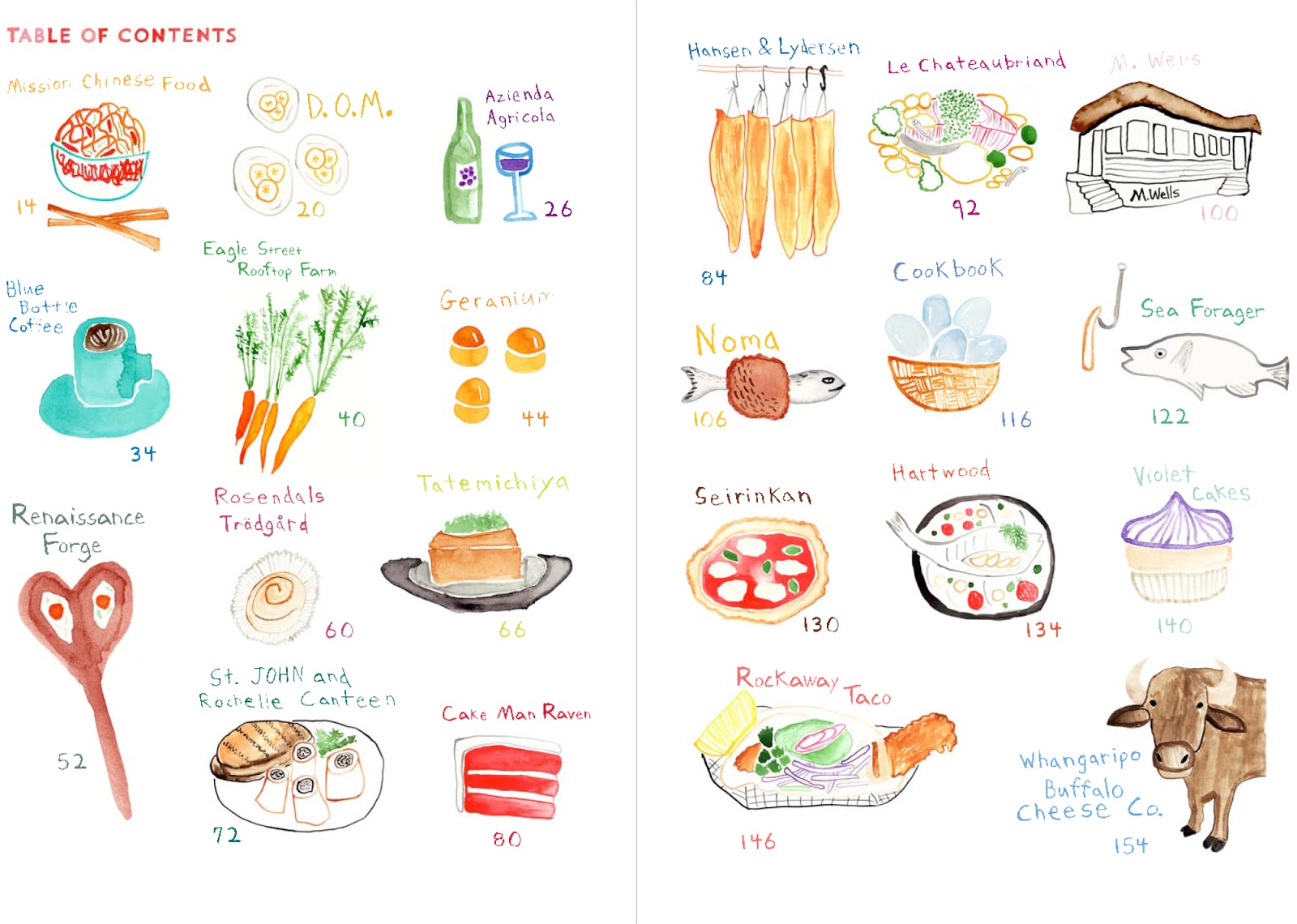
Todd Selby is a photographer.  He loves to shot folks in their natural environment and recently he turned his camera to trendy food folk.  The result is Edible Selby, a true vision of gastroporn if ever there was one.  Cooking in one thing but letting someone roam around your kitchen, well that is revelatory. 

The text, as you can see from the table of contents, is handwritten.  The book is filled with drawings and pertinent questions to chefs and home cooks alike.

There are small workrooms...

Back alley gardens...


and a handful of handwritten recipes like The Mast Brothers explaining how to make chocolate at home.

If you love trendy food purveyors, you will love this.  More pictures than recipes, but who cares!
Blog Widget by LinkWithin